flashfondationeditorsarchivesantresistancelinks

INFO-TURK

A non-government information center on Turkey

Un centre d'information non-gouvernemental sur la Turquie

33. Year / 33. Année
March
 
2008 Mars
N° 355
53 rue de Pavie - 1000 Bruxelles
Tél: (32-2) 215 35 76 - Fax: (32-2) 215 58 60
Chief Editor /Rédacteur en chef: 
Dogan Ozgüden

Responsible editor/Editrice responsable:

Inci Tugsavul
Human Rights
Pressures on  media
Kurdish Question
Minorities
Interior politics
Armed Forces
Religious affairs
Socio-economics
Turkey-Europe
Turkey-USA
Regional Relations
Cyprus and Greece
Migration

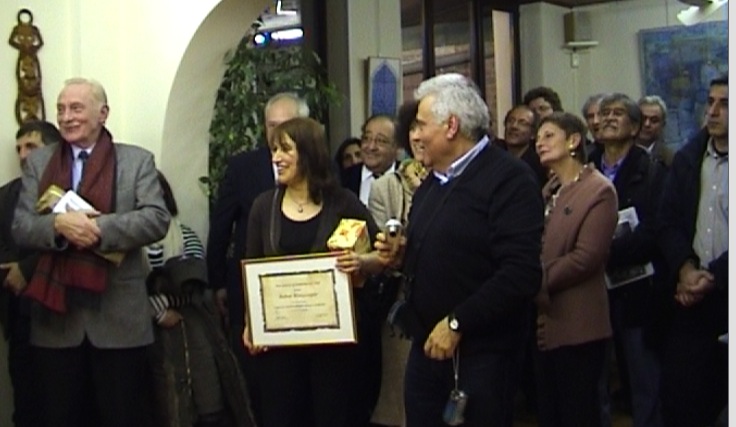
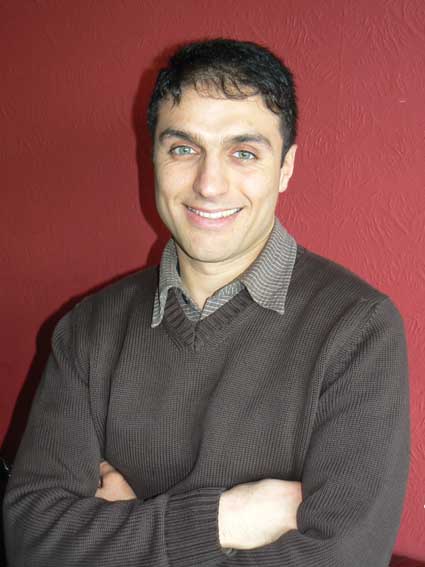
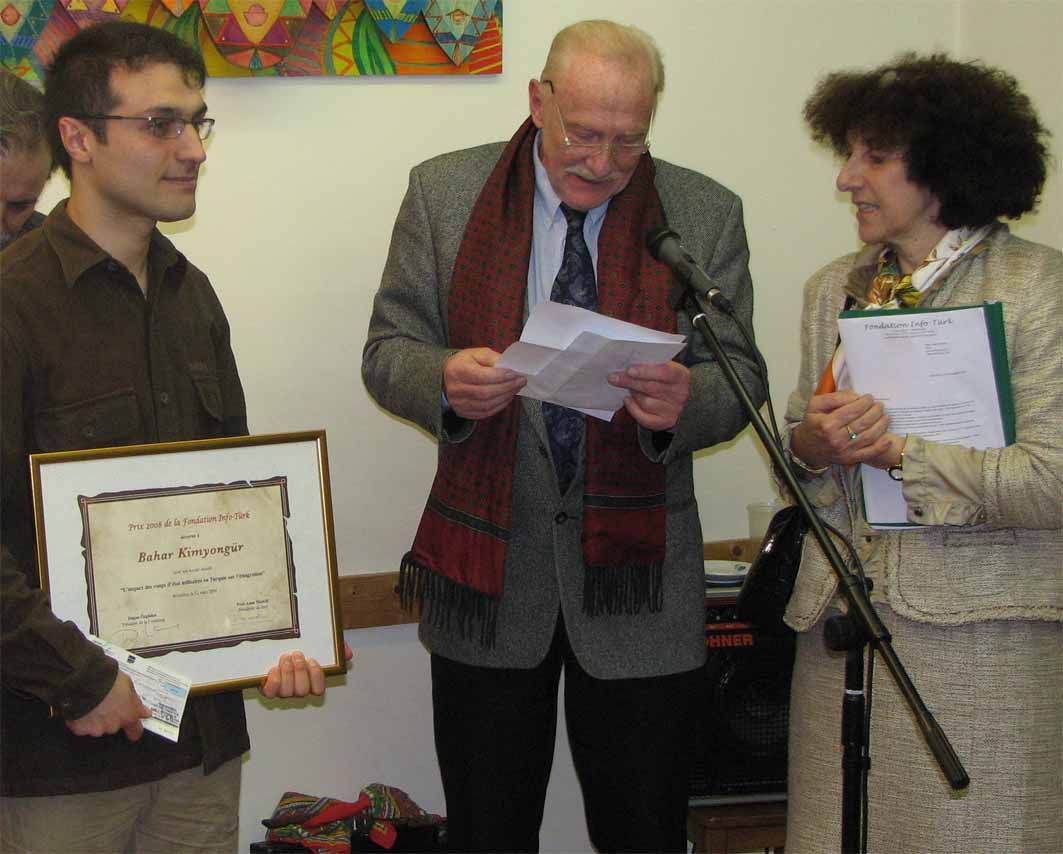
Le prix Info-Türk a été décerné à Bahar Kimyongür

Site searchWeb search

powered by FreeFind
36th ANNIVERSARY OF KIZILDERE
March 30, 1972

Ten members of the THKO (People's Liberation Army of Turkey) and the THKC (People's Liberation Front of Turkey), Cihan Alptekin, Mahir Cayan, Ömer Ayna, Hüdai Arikan, Sinan Kazim Özüdogru, Ahmet Atasoy, Saffet Alp, Ertan Saruhan, Selahattin Kunt and Nihat Yilmaz were murdered by the "security" forces in Kizildere

See PDF: File On Turkey by the Democratic Resistance of Turkey
Pages from 217 to 223


Titres des évènements du mois
Titles of this month's events


Droits de l'Homme / Human Rights

Trois nouvelles inculpations dans l'
enquête sur un réseau nationaliste

Appel urgent pour l'aide aux enfants kurdes torturés et emprisonnnés
 Proof of Torture by the Turkish Police on the streets!
 ECHR Sentences Turkey in IHD Case
La militante des droits de l'Homme Keskin condamnée pour insulte à l'armée
 Appel aux autorités turques pour respect des droits de l'Homme
Le 37e anniversaire noir du coup d'état de 1971 en Turquie
Amnesty International: 2007 a “Lost Year” for Turkey
"Un policier ma fais boire son urine"
A Chief Prosecutor Praises Military Coup and Capital Punishment
Human Rights Activist Ridvan Kizgin Imprisoned in Bingöl
Lawyer and human rights activist on trial for "denigrating the army"
Pressures against Human Rights Defenders Aim to Leave Truths in the Dark!
International delegation: Prison reform remains a serious problem
New cases and prosecutions against human rights defenders in Turkey
IHD Declaration: Give a chance to Peace!
Two IHD documents on human rights violation in Turkey


Pression sur les médias / Pressure on the Media

Nouvelle attaque au cocktail Molotov contre le quotidien Cumhuriyet

Journalist Vedat Kursun in Prison until 15 April
Access to Indymedia-Istanbul and YouTube websites blocked in Turkey
 Dogu Perinçek et ses trois collaborateurs inculpés par une cour
Une pétition en France en faveur de Ragip Zarakolu
Haftaya Bakis Newspaper shut down for one month
Ilhan Selçuk mis en liberté après son interrogatoire
Interpellation controversée du journaliste Ilhan Selçuk
Newspaper Investigated for Anti-Militarist Support
Three Years Imprisonment for Threatening Agos Newspaper
Craintes que le verdict prochain de Zarakolu mène à sa condamnation
State Theatre Censors Erdogan Satire
Trial in Bookshop Bombing Postponed Once More
 Prof. Yayla Punished for Saying Kemalism is “Regressive”
 Media Ban on Ergenekon Gang “Violates ECHR Law”
 Government shelves amendment to Article 301
 Prosecutor Invites Bülent Ersoy to Answer Questions
Cartoonist Sacked as his cartoon published in Islamist Paper
The Army Complained, Journalist Düzel Investigated under 301
 Writer Demirer on trial for referring to Armenian genocide
Agos' owner and editor face prison sentences for "attempting to influence the judiciary"
This week’s case of freedom of expression in Turkey
Procès des assassins de Hrant Dink: des décisions décevantes


Kurdish Question / Question kurde

Le président du DTP Demirtas risque 10 ans de prison

Reportage AFP: Sur les terres du PKK, dans les Monts Qandil
La guérilla ripostera si la violence de l'Etat turc se poursuit
DTP Condemns Excessive Police Violence at Newroz
Le KNK condamne fermement la cruauté des états syrien et turc
DTP's Declaration Concerning the Newroz  Repression
Nouvelles violences après la mort de deux manifestants kurdes
Investigation on DTP Deputy Pervin Buldan
Deux Kurdes tués par la police lors des manifestations de Newroz
Les Kurdes ont célébré le Newroz sous haute sécurité
21 mars: La fête traditionnelle kurde Newroz
Appel au dialogue par les guérillas kurdes
“Closing Parties Does Not Solve Kurdish Issue”
Erdogan refuses to talk with DTP leaders
Dix rebelles kurdes tués par l'armée dans le sud-est de la Turquie
Peines requises contre 53 membres du DTP dans l’affaire de Roj TV
Le préfet a interdit les lettres “W" et “O”
 Supreme court prosecutor presents view on DTP closure trial
Deux dirigeants kurdes condamnés à 10 mois de prison
Asking for water in Kurdish is a Crime
Kurdish Guerrillas Forge a Unity Based on Hardship and Defiance
Les Kurdes d'Istanbul incités à rallier le PKK
You Don’t Like Kurdish? How About Chinese or Japanese?
Décès d'un manifestant kurde après des heurts avec la police
Prosecutor Wants DTP MP's Immunity Removed
CPT: L'isolement d'Öcalan doit cesser
Former MP Alinak Gets 6 Months for Letter in Kurdish
L'imam disant non a la guerre est arreté
L'opération turque a "échoué", selon le chef du PKK
Kurdish Guerrilla's Claim: Turkish invading forces lost 120 soldiers


Minorités / Minorities

Deux gendarmes étaient au courant du projet d'assassinat de Hrant Dink

Communiqué des associations  assyro-chaldéennes, assyriennes, syriaques et araméennes
 Armenian Genocide Survivor Passes Away
La cour ajourne le procès de la chanson accusée de racisme
Dink Family Lawyers to Appeal to ECHR
Cérémonie de la haine contre les Arméniens à Erzurum
 When Will the Kidnapping and Murder of Assyrians Stop?
Lawyers of Agos Newspaper Rejected the Board of Judges
Chaldean Bishop Kidnapped in North Iraq, Bodyguards Killed


Politique intérieure/Interior Politics

La Cour constitutionnelle a jugé recevable la demande d'interdiction de l'AKP au pouvoir

 La Cour constitutionnelle se prononcera lundi sur des poursuites contre l'AKP
 L'AKP cherche à éviter d'être frappé d'interdiction
AKP Was Silent in DTP Closure Trial
 Erdogan a exclu l'appel à des élections anticipées
La Cour constitutionnelle examine la demande d'interdiction
Réactions contre la tentative d'interdiction des partis politiques
Choc de la menace d'interdiction du parti au pouvoir
Lancement d'une procédure d'interdiction contre Erdogan et l'AKP
Reactions against the closure case for ruling party

24 parties closed in 44 years in Turkey

Immunity of 27 Parliamentarians In Question
Opposition targets army in troop withdrawal controversy
Turkey's military rejects criticism of operations


Forces armées/Armed Forces

L'Armée turque affirme avoir tué 15 militants kurdes dans le nord de l'Irak
Former Navy Commander's Military Coup Diaries Proved to be Genuine
L'armée turque lance ses opérations printanières contre la guérilla kurde
La société turque entre l’armée et les islamistes
Flood of "insult" lawsuits contradicts army's professed tolerance of criticism
Conscientious Objector Ismail Saygı Arrested
L'opération turque en Irak a-t-elle été un succès?
Deux jeunes demandent au Parlement d'être dispensé du service militaire
 L'armée établit des zones de sécurité pour combattre le PKK
 Nouveaux bombardements turcs sur le Kurdistan irakien
La Turquie condamnée pour avoir appelé un vieillard sous les drapeaux
L'Armée réitère la menace de nouvelles opérations dans le Kurdistan irakien
Bilan contrasté pour l’armée turque dans le nord de l’Irak
Turkey has left 3200 personal landmines in southern Kurdistan
L'armée menace toujours de réinvestir le nord de l'Irak


Affaires religieuses / Religious Affairs
 

Erdogan défend l'autorisation de porter le voile à l'université

 Enlevé en février, l’archevêque chaldéen de Mossoul a été retrouvé mort
Le Conseil d'Etat porte un coup aux défenseurs du voile

Compulsory Religious Education is Hypocritical Violation of Rights
L'autorisation du voile sème la confusion dans les universités turques
Le Conseil d'Etat turc se prononce contre les cours obligatoires de religion


Socio-économique / Socio-economic

Croissance de 4,5% en 2007, légèrement en deçà des objectifs

 Ankara lance un appel d'offres pour construire sa 1ère centrale nucléaire
 La possible interdiction de l'AKP déprime les milieux économiques turcs
“Purple Roof”, Women's Shelter, Celebrates 18th Year
Mobilisation sur les "chantiers navals de la mort" en Turquie
 La Bourse d'Istanbul, la livre turque en baisse sur fond de crise politique
Erdogan provoque la controverse en conseillant aux Turques de procréer
Strikes Threatened Against Reform of Social Security Law
Prime Minister: “Women give Birth to 3 for Turkish Nation”
Turkey Not Offering Shelters to Women
1500 habitants demanderont l’asile en cas de construction du barrage d’Ilisu
 Lower-Income Families Affected by Inflation
Boom de l'inflation en Turquie


Relations turco-européennes / Turkey-Europe Relations

L'UE avertit la justice turque des effets à "long terme" de l'interdiction de l'AKP
European Parliament questions trust in Turkish judiciary
Barroso: Union Méditerranée: "pas une alternative" à l'entrée de la Turquie dans l'UE
 La Commission européenne appelle Ankara à des réformes "rapides"
La Roumanie soutient "sans réserve" l'adhésion de la Turquie à l'UE
 A new conference on the Kurdish Question at the European Parliament
Des intellectuels turcs pressent le gouvernement d'accélérer les réformes


Turquie-USA/ Turkey-USA

Manifestations en Turquie à l'arrivée de Dick Cheney
Pas de renforts turcs pour le moment en Afghanistan

US Department of State: "Serious human rights problems in Turkey"
La Maison Blanche rejette toute discussion avec le PKK
Amiral William Fallon: les Turcs doivent traiter avec le PKK
Interrogations sur le rôle des Etats-Unis dans le retrait turc d'Irak


Relations régionales / Regional Relations

La conférence de presse des Premiers ministres bulgare et turc annulée
Erdogan en Bosnie pour renforcer la coopération commerciale
Trois morts dans des heurts entre des Kurdes et la police en Syrie
 Tirs d'artillerie iraniens sur des villages du Kurdistan irakien
 Talabani ne veut pas d'une nouvelle opération turque en Irak
Ankara et Bagdad comptent sur l'économie pour apaiser leurs tensions
L'accueil de Talabani boycotté par les chefs militaires turcs
Afghanistan: un Turc d'Allemagne, auteur d'un attentat anti-Otan
 Will Talabani honor Ataturk?
Bulgarie: l'extrême droite manifeste contre la minorité turque
Erdogan condamne un "usage disproportionné de la force" à Gaza
Ahmadinejad accuse les EU d'importer le terrorisme au Moyen-Orient
Barzani And Talabani's Comments On Turkish Withdrawal


Chypre et la Grèce / Cyprus and Greece

L'Armée turque refuse de se rétirer immédiatement de Chypre

L'ingérence de l'Armée turque dans les relations turco-grecques à Chypre
Cyprus government spokesman condemned General Buyukanit's visit
 La presse salue la relance des négociations sur l'avenir de Chypre
 Rencontre entre dirigeants chypriotes grec et turc sur l'avenir de l'île
 Christofias: la Turquie ne doit pas interférer dans les discussions
 Rencontre en mars entre les dirigeants des communautés grecque et turque


Immigration / Migration

Un Kurde recherché par la Turquie arrêté en Belgique

 L'islam, première religion
 à Bruxelles dans vingt ans
Mobilisation du PCF pour la libération d'un militant politique de Turquie
Le prix Info-Türk a été décerné à Bahar Kimyongür
Incendie à Ludwigshafen: le parquet écarte la thèse de l'acte criminel


Droits de l'Homme / Human Rights

Trois nouvelles inculpations dans l'enquête sur un réseau nationaliste

Deux hommes politiques et un journaliste ont été inculpés et écroués samedi soir par un tribunal d'Istanbul dans le cadre d'une enquête sur un réseau qui est soupçonné de vouloir renverser le gouvernement islamo-conservateur d'Ankara, a rapporté l'agence Anatolie.

Ces nouvelles arrestations portent le nombre d'inculpés dans cette affaire à 47 personnes, selon Anatolie.

Les trois suspects accusés de "possession de documents classés secrets" sont Nusret Senem, secrétaire général du Parti des travailleurs (IP, non-représenté au Parlement), formation autrefois maoïste et désormais nationaliste, Hikmet Cicek, responsable de ce parti pour les médias et Hayati Ozcan, journaliste d'une chaîne de télévision dans laquelle l'IP détient des intérêts, selon l'agence.

L'enquête sur l'existence d'un réseau ultra-nationaliste appelé Ergenekon, a débuté en juin 2007 après la découverte d'explosifs dans une maison à Istanbul. Des militaires en retraite, des journalistes, des avocats font partie des 47 personnes interpellées dans cette affaire.

Des médias turcs ont affirmé que ce réseau projetait d'assassiner des personnalités qu'il considérait comme anti-nationalistes. (AFP, 30 mars 2008)

Appel urgent pour l'aide aux enfants kurdes torturés et emprisonnnés

La direction de la Communauté Kurde de la Bavière vient de lancer un appel urgent après la violence de l'Etat envers le peuple kurde lors des célébrations de Newroz dans le Kurdistan de Turquie:

A l´occasion de la fête de Newroz en Turquie, des nombreux enfants kurdes ont été arrêtés, maltraités, enlevés et torturés brutalement par des membres de la police et des unités turques d'opération militaire et speciale. On leur refuse un traitement medical et comme il semble aussi la défense par un avocat.

Les incidents ont été en partie filmés. Sur un video filmé par les unites d´operation speciales, http://www.youtube.com/watch?v=4ENIwySnfNM, vous pouvez voir comment un membre d´une unité speciale en civil fracture le bras à Cuneyit Ertus qui a 15 ans.

Les membres des unites speciales crient : "Nous cassons les bras à ceux qui jettent des pierres."  L'idiome est de l´ancien premier ministre turc Tansu Ciller: Les mains qui se levent contre la Turquie, nous les casseront, la langue, qui parle contre nous, nous la couperons.

Depuis l´incident survenu le 23.03.2008 à Hakkari/Yüksekova, Cuneyit Ertus est toujours emprisonné sans avoir recu de traitement medical. Personne n´a pû le voir jusqu´ici.

D´autres enfants   subissent également le même sort. Une information vient d´arriver de l´association des avocats de Hakkari. Un enfant a perdu ses yeux et a subi une fracture de crâne. Il est actuellement opéré à Ankara. Nous attendons d´autres informations demain.

Il faut aider d´urgence ces enfants emprisonnés.
Veuillez transmettre l'information à vos distributeurs et nous  communiquer rapidement ce qui a été entrepris.
Vous pouvez toujours nous contacter aux addresses ci-dessus.
Nous-mêmes dépendons pour le moment des publications parues dans l'Internet et des médias kurdes travaillant à l'étranger ainsi que de l´association des  avocats et de IHD, organisation des droits de l´homme. Les informations sur Cuneyit Ertus sont de Roj TV, une station de télévision kurde, qui a recu  l'information du père de l'enfant. 

Vidéo montrant ce qui est arrive à Cüneyit Ertus :  

http://www.youtube.com/watch?v=4ENIwySnfNM
http://www.youtube.com/watch?v=b2JA7yy56Eg&feature=related 

D´autres liens montrant la situation générale et la facon dont des enfants kurdes sont maltraités en plein rue:

http://www.youtube.com/watch?v=pYvE7bm2cl0&feature=related
http://www.youtube.com/watch?v=PikJpE0OH2U&feature=related 
http://www.youtube.com/watch?feature=related&v=ML_TnmyxCrc  
http://www.youtube.com/watch?v=4SxHbFs0aao&feature=related  
http://www.youtube.com/watch?v=b2JA7yy56Eg&feature=related

Liens pour voir les rapports des droit de l'homme  établi par l`IHD (organisation kurde des droits de l´homme  en Turquie) en anglais:

http://www.ihd.org.tr/report/summary/2007.htm
http://www.ihd.org.tr/report/summary/January-June2007.html
http://www.ihd.org.tr/report/summary/1999_2007_comparative_balance_sheet.htm
http://www.ihd.org.tr/report/summary/2006.htm

Contact: mehmetsahin@t-online.de

Proof of Torture by the Turkish Police on the streets!

http://www.youtube.com/watch?v=4ENIwySnfNM

Newroz was celebrated by millions throughout the four parts of Kurdistan. The people gave a reply to those claiming "they do not know what they want". However, once more the price to pay was heavy. The Syrian regime killed three Kurdish youths on the 20th of March. Mihemed Zekî Remedan, Mihemed Mehmud Hisên ve Mihemed Yahya Xelîl lost their lives.

The Diyarbakir celebration was an occasion where hundreds of thousands sent out messages for peace, however, the very next day in Van, Hakkari and Siirt the Newroz celebrations were dealt a blow by the City Commissioners appointed by the AKP government. The Turkish police killed two people during the celebrations: Zeki Erinc in Van and Ikbal Yasar in Hakkari had lost their lives. Masked and uniformed officers terrorised the people. Kurdish people were targeted on the streets, in alley ways and in homes. A 15 year old boys arm was broken in front of cameras by "security" forces. There are three officers by the child in the footage. One of them calmly brakes the arm of the unidentified 15 year old in front of camera.

The Turkish Prime Minister Recep Tayyip Erdogan's nice words on the 8th of March regarding women were not realised in Kurdish cities where women were severly beaten by police officers.

Millions of people were on the streets for the Newroz celebration which is a Middle Eastern festivity. However the Kurdish people paid a heavy price for celebrating this day this year. Western cities like Istanbul (48), Izmir (250), Adana (70), Kocaeli (11), Denizli (3) and Mersin (7) and Diyarbakir (20), Van(200), Kars (7), Dersim (7), Hakkari (50), Silopi (18), Cizre (12), Siirt (16), Malatya (19), Urfa (123) and in Batman (8), in 8 days at least 869 arrests.

On the 23rd of March 250 people were arrested in Izmir, 45 of them are still in custody, in Adana (29), Mus (8), Hakkari (20), Urfa (7), Mersin (5), Denizli (3) and CIzre (8) and Van (at least 1).

After Newroz the attacks are still continuing in the shape of house raids. The least tolerant towards the Newroz celebrations was without a doubt Turkey.

There are a lot of children among the arrested. Lawyers have stated that the children were heavily beaten while being arrested. There are many casualties as a result of police brutality and some people are still uncergoing treatment. (kurdishinfo@gmail.com, March 28, 2008)


ECHR Sentences Turkey in IHD Case

Considering the case brought by Ecevit Piroglu and Mihriban Karakaya, representatives from the Izmir branch of the Human Rights Association (IHD), the European Court of Human Rights (ECHR) has decreed that Turkey did not respect the right to defense, attempted to close the IHD branch without any justification, and violated the right to the freedom of expression.

The ECHR announced its decision on Tuesday, 18 March. The court decreed unanimously that Articles 6/1, 10 and 11 of the European Convention on Human Rights had been violated.

The applicants were both members of the executive board of the Izmir Branch of the Human Rights Association at the relevant time.
Governor demanded membership annulment

The case concerned the applicants’ complaints about their conviction for having failed to comply with a request by the Governor of Izmir to annul memberships of their Association.

On 10 July 2001 the Governor of Izmir sent a letter to the Association requesting that 13 members, including Mihriban Karakaya, have their membership annulled on account of their alleged involvement in illegal activities.

That letter also mentioned that Ms Karakaya had been taken into police custody in April 1999, but had subsequently been released as it had not been established that she had any connection with the illegal TKP/ML-TIKKO (the Turkish Communist Party / Marxist-Leninist–Turkish Workers' and Peasants' Liberation Army).

The Association replied that they would not comply with the request, alleging that none of the 13 people had prior convictions which would ban them from founding or becoming a member of an association in accordance with Turkish law. Criminal proceedings were subsequently brought against the applicants.
No opportunity for defense

In December 2001, Izmir Magistrates’ Court convicted the applicants without holding a hearing. The applicants lodged an objection against their conviction, which was dismissed by Izmir Criminal Court. During those proceedings, none of the defendants were given the opportunity to make submissions to the court.
Karakaya sentenced for press statement

Mihriban Karakaya further complained about a second criminal conviction for having been involved in a press declaration to protest against the deployment of American troops in Afghanistan.

In October 2001 the Association and several local non-governmental organisations (NGOs) took part in a movement called the “Platform of Conscientious Objectors to War” and made a collective press declaration to protest against the deployment of American troops in Afghanistan.

A second set of criminal proceedings were brought against Ms Karakaya under Section 34 of the Associations Act for her involvement with that movement as the prosecutor considered that it was an organisation without any lawful status in Turkey.

Ms Karakaya was ultimately found guilty in December 2001. She lodged an objection against her conviction, arguing in particular that “a collective press declaration” could not be classified as contributing to the establishment of an unlawful organisation. In February 2002 the criminal court dismissed her objection.
ECHR decided: Three articles violated

The ECHR concluded that the criminal proceedings had been unfair, in violation of Article 6/1. It also considered that the Turkish Government had not demonstrated why the public authorities could have legitimately required the annulment of the applicant’s membership.

The court further concluded that Ms Karakaya had been deprived of proper legal protection against arbitrary interference with her right to freedom of association, in violation of Article 11.

The ECHR observed that Ms Karakaya had been convicted under Section 34 of the Associations Act, and argued that the local courts had extended the scope of Section 34 beyond what could have been reasonably foreseen.The Court thus concluded that the interference with the Ms Karakaya's freedom of expression had not been prescribed by law, in violation of Article 10. (BIA, Erol, March 20, 2008)

La militante des droits de l'Homme Keskin condamnée pour insulte à l'armée

Un tribunal d'Istanbul a condamné jeudi à six mois et 20 jours de prison une militante des droits de l'homme pour avoir proféré deux ans plus tôt des "insultes" contre l'armée dans un entretien. Le procès a été ouvert à la suite d'une plainte de l'état-major de l'armée turque après la publication par le journal allemand Der Tagesspiegel d'un entretien dans lequel la militante, Eren Keskin, affirmait que l'armée exerçait une influence injustifiée sur la politique, la justice et les institutions. L'influence des militaires doit être réduite pour que la démocratie turque puisse s'épanouir, a-t-elle affirmée dans l'entretien, publié en juin 2006.

Lors de l'audience jeudi, qui n'a duré que 15 minutes, Mme Keskin a affirmé qu'elle maintenait ses positions et estimé que ses propos entraient dans le champ du "commentaire politique". Les juges l'ont reconnue coupable d'"insulte à l'armée turque", réprimée par l'article 301 du code pénal, et l'ont condamnée à six mois et 20 jours de prison convertibles en une amende de 4.000 livres turques (2.100 euros, 3.250 dollars).

Mme Keskin a indiqué qu'elle ferait appel mais qu'elle n'avait nullement l'intention de payer l'amende parce qu'elle ne pense pas que "la liberté peut être achetée" et parce qu'elle ne dispose pas de la somme. L'article 301, qui réprime aussi l'"insulte à l'identité turque", est sévèrement critiqué par les militants turcs des droits de l'homme et par l'Union européenne - avec laquelle la Turquie a entamé en 2005 des négociations d'adhésion - comme un obstacle à la liberté d'expression. L'état-major a également déposé une plainte à l'encontre de Mme Keskin devant le Barreau d'Istanbul, demandant la radiation de l'avocate.

La militante, connue pour ses multiples campagnes en faveur des droits des Kurdes, fait l'objet de plusieurs autres procès pour insulte à l'armée. (AFP, 20 mars 2008)

Appel aux autorités turques pour respect des droits de l'Homme

Le communiqué du Collectif pour les droits de l’Homme en Turquie, composé de l'Action des chrétiens pour l’abolition de la torture (ACAT); Assemblée citoyenne des originaires de Turquie (ACORT); Assemblée européenne des citoyens (AEC-HCA France) ; Amnesty International France (AIF); Ligue des droits de l’Homme (LDH/FIDH):

Grâce à ses récentes réformes législatives, la Turquie a déjà accompli d’immenses progrès sur la voie des libertés démocratiques. Comme, à nouveau, elle s’apprête à faire voter divers amendements à sa Constitution et à son Code pénal, le Collectif souhaite que soient évités les compromis et les demi-mesures qui ne permettraient pas d’effectuer les véritables progrès attendus par la population. Par ailleurs, étant donné l’aggravation des violations des droits fondamentaux en 2007 par rapport à l’année précédente, nous exhortons les autorités à veiller à faire appliquer de telles réformes sur le terrain.

Liberté d’expression

Le Collectif est fortement préoccupé par l’absence de rigueur dans la législation turque, qui favorise l’interprétation abusive d’articles imprécis du Code pénal et des Lois antiterroristes. C’est pourquoi il est à déplorer que le gouvernement se satisfasse de telles ambiguïtés, et permette que des milieux extrémistes les utilisent pour harceler écrivains, journalistes, éditeurs, artistes et défenseurs des droits de l’Homme qui expriment pacifiquement leurs points de vue.

En 2007, plus de 254 personnes ont été inculpées pour délit d’opinion. Cinquante-cinq d’entre elles, dont 34 journalistes, ont été poursuivis à cause de l’imprécision de l’article 301 du Code pénal[1]. Comme le gouvernement a promis « d’amender » cet article, le Collectif est préoccupé par la crainte d’y voir maintenu des ambiguïtés, et demande qu’il soit abrogé. En effet, même lorsque certains prévenus sont acquittés, comme l’a été le Prix Nobel Orhan Pamuk ou la romancière Elif Safak, ils sont de nouveau poursuivis en appel, ceci dans un climat de harcèlement d’extrémistes qui culmine avec le meurtre du journaliste Hrant Dink.

Tortures et violences policières

Bien que les cas de tortures alléguées aient officiellement diminué en Turquie, le Collectif constate que la Fondation pour les droits de l’Homme (TIHV) reçoit dans ses locaux plus de demandeurs de soins qu’auparavant, en dépit des efforts du gouvernement pour éradiquer les mauvais traitements. Il semble que ceux-ci soient souvent pratiqués à l’écart des prisons, lors des manifestations et dans les voitures de la police. En 2007, cette fondation a comptabilisé 406 demandeurs de soins après maltraitances alléguées, contre 337 en 2006.

De toute façon, le Collectif proteste contre les nouvelles lois antiterroristes qui, par exemple, prolongent à 24 heures la garde-à-vue au secret, s’élève contre l’ambiguïté des textes, et déplore l’absence de contrôles indépendants dans les prisons, la partialité des enquêtes judiciaires et l’utilisation par les tribunaux d’aveux extorqués sous la torture.

Culture de l’impunité

Le Collectif est particulièrement préoccupé par l’indulgence des tribunaux à l’égard des agents de l’État. Une telle impunité est inacceptable, notamment, lorsqu’elle protège des forces de l’ordre qui commettent des violences, des tirs injustifiés ou des tortures. Le dernier trimestre 2007 a compté de nombreuses exécutions extrajudiciaires commises par la police et davantage encore par l’armée. Bien que punies par la loi, de telles pratiques sont en recrudescence, et n’aboutissent à aucune enquête indépendante.

Le collectif est solidaire de tous les défenseurs des droits de l’Homme qui, en Turquie, se sont donné pour tâche de lutter en faveur de la paix, de la liberté et de la démocratie (Amnesty International Turquie, Association des Droits de l’Homme (IHD), Helsinki Citizens’Assembly, Mazlum Der, TIHV,  etc.). (claude.edelmann@wanadoo.fr, C/O Ligue des droits de l’Homme 138 rue Marcadet – 75018 Paris, 19 mars 2008)

Le 37e anniversaire noir du coup d'état de 1971 en Turquie

Alors que l'armée turque s'ingère toujours dans la vie politique de la Turquie et réitère la menace contre le Kurdistan irakien tout en mettant en péril la paix et la stabilité dans la région, les forces démocratiques du pays commémorent aujourd'hui le 37e anniversaire du coup d'état militaire du 12 mars 1971.

Il y a deux ans, la fondation Info-Türk avait lancé un concours portant sur l'impact des coups d'état militaires en Turquie sur l'émigration.

Le lauréat du concours sera annoncé ce soir par le jury préside par l'historienne Anne Morelli, lors d'une soirée de commémoration du 37e anniversaire du coup d'état de 1971, organisée par l'Association des Arméniens Démocrates de Belgique, les Associations des Assyriens de Belgique, l'Institut Kurde de Bruxelles et la Fondation Info-Türk.

Le 12 mars 1971, les généraux avaient renversé le gouvernement et ouvert une période de répression sans précédent en Turquie, membre du Conseil de l'Europe et l'OTAN ainsi que membre associé de l'Union européenne.
 
En effet, depuis plus d'un siècle, le processus de démocratisation en Turquie a été interrompu souvent par des pratiques répressives et des coups d'état militaires: le coup d'état des Jeunes Turcs en 1908, le génocide des Arméniens et des Assyriens en 1915, l'oppression du peuple kurde et des forces de gauche suivie par la proclamation du régime parti unique en 1925, le pogrom des minorités non-musulmanes en 1955, le coup d'état de 1960…
 
Les 37 ans derniers ont été marqués de deux putschs sanglants des généraux turcs en 1971 et 1980: arrestations massives, tortures, pendaisons, violations des libertés d'expression, renforcement de l'injustice sociale, négations des droits fondamentaux du peuple kurde et des minorités arménienne, assyrienne, grecque, etc.
 
Seulement durant les deux ans suivant le coup d'état du 12 mars 1971:

    * Des milliers de personnes ont été jugées par les tribunaux militaires de la loi martiale sous l'inculpation de délits pour la plupart antérieurs à la proclamation de l'état d'exception.
    * Plus de 10.000 personnes dont 3600 enseignants, 118 journalistes, traducteurs, éditeurs, écrivains, artistes, 67 universitaires ont été mis en garde-à-vue, arrêtés ou jugés et condamnés.
    * 37 journaux ou périodiques ont été interdits ou suspendus.
    * Plus de 200 titres de livres ont été saisis et plus d'un demi-million d'exemplaires détruits.
    * 28 personnes ont été tuées dans la rue par les forces de l'ordre, dans des circonstances douteuses.
    * Les inculpés, détenus souvent depuis plusieurs semaines, ont dénoncé lors de leurs procès les tortures qu'ils ont subies au cours de l'instruction. Ces accusations sont aujourd'hui confirmées par les rapports de plusieurs organismes internationaux de juristes.
    * Malgré l'indignation de l'opinion mondiale, trois leaders de la jeunesse progressiste ont été condamnés à mort et exécutés. D'autres condamnations à mort sont prononcées et 151 requises par les procureurs militaires.
    * Trois partis politiques ont été dissous. Les dirigeants du parti socialiste TIP ont été condamnés à de lourdes peines de prison, allant jusqu'à 15 ans.
    * La répression s'est durcie au sujet des minorités ethniques et les opérations répressives contre les Kurdes généralisées non seulement dans le Kurdistan mais aussi dans les grandes métropoles du pays.
    * 111 personnes ont été condamnées à de lourdes peines de détention allant jusqu'à 16 ans, sous l'inculpation de "séparatisme".
    * Le droit de grève et de syndicalisation a été limité par l'adoption des amendements législatifs sous la pression des militaires.
    * Toutes les associations d'étudiants ont été dissoutes.
    * Le Syndicat des Enseignants de Turquie (TÖS), groupant plus de 100.000 enseignants a été dissout, ses dirigeants condamnés à des peines de prison allant jusqu'à 8 ans, des milliers de ses membres ont été poursuivis. Tous les syndicats des secteurs publics ont été dissous.

Le coup du 12 mars 1971 marque également le déclenchement de l'émigration politique vers les pays européens. Le premier exode massif de Turquie vers les pays étrangers était sans aucun doute celui des Arméniens et des Assyro-chaldéens suivant le génocide et la déportation de 1915. L'émigration politique des opposants du régime et des gens appartenant aux minorités ethniques et religieuses a repris après le coup d'état de 1971 et s'est fort accélérée après le deuxième coup d'état militaire du 12 septembre 1980.

C'est après ces coup d'états que l'ingérence du régime d'Ankara dans la vie politique des pays accueillant des immigrés turcs a été bien structurée et un système de pression et d'intimidation a été instauré afin d'étouffer toute voix s'élevant en dehors du contrôle du lobby turc.

Il s'agit d'une ingérence qui menace sérieusement la vie démocratique comme on a observé lors des agressions criminelles contre les institutions kurdes, arméniennes et assyriennes dans la capitale européenne ainsi que dans les discours et pratiques ultranationalistes et négationnistes des élus d'origine turque, otages du régime d'Ankara.

"Un policier ma fais boire son urine"

"Un policier ma fais boire son urine" se plaint un citoyen à l'IHD (Ligue des Droits de l'Homme). Le citoyen du nom de Tahir Göner a porté plainte aux bureau de l'IHD a Istanbul , un policier l'aurait torturé et l'aurait fais boire son urine. Travaillant dans le batiment mr Göner est frappé par un policier qui étais venu pour calmer une dispute qui a éclaté entre les membres de sa famille. Il affirme avoir été enfermé dans sa maison avec des bombes lacrymogènes lancés par les policiers , et par la suite il a été enmenés dans un bois où il fut torturé.

Lors d'un communiqué de presse organisé dans les bureaux de l'IHD, mr Tahir déclare "après nous avoir frappé moi et mes 5 frères , nous fûmes divisé en deux groupe , l'un fut enmené dans un bois , l'autre fut enmené en bord de mer , ils nous ont frappés pendant des heures .

L'un des policier urina dans une bouteille et me forca à avalé le contenu en m'insultant. Après ces faits , nous avons été enmenés a l'hopital , où les policiers ont continués à nous frapper , nous n'avons pas été soigné . Peu après , ils nous ont emmenés au poste de police de Gebze Asayis où nous avont subis de lourdes tortures .Ils ont cassés mon nez , et j'ai encore des bleus dans mes jambes" .

Les frères Göner affirme que ces tortures leurs ont été commises à cause de leurs origines Kurde . "Ils nous ont forcés à signé des documents" affirme l'un d'eux.  (Kurdish Info, 12 mars 200

Amnesty International: 2007 a “Lost Year” for Turkey

The London-based Amnesty International (AI) organisation prepared a briefing on human rights in Turkey in preparation for the meeting of a EU and Turkish Troika on 22 February, and for a meeting of the EU-Turkey Association Committee on 5 and 6 March.

 Unfortunately, the six-page report concluded that there has been a deterioration in human rights in 2007 and has called on others to put pressure on the Turkish government in their meetings.

The report speaks of the continuation of torture and maltreatment, legal impunity of some, the persecution of human rights activists, violations of the freedom of expression, and the continuing pressures on conscientious objectors.

Torture, ill-treatment and impunity

Although the report acknowledges that there has been a reduction in torture cases, it continues:

“However, there have also been setbacks. In prosecutions of torture and ill-treatment, independent medical reports have rarely been accepted by courts and the decision to set up a judicial police force, required under the Code of Criminal Procedures, has not been implemented. June 2006 revisions to the Law to Fight Terrorism allowed a delay of 24 hours in a detainee’s right to legal counsel. The law also gave security forces the right to use lethal force ‘directly and unhesitatingly’ in operations against ‘terrorist organizations.’"

"Likewise, in June 2007 amendments to the Law on Powers and Duties of Police that gave police widespread powers of stop and search, additionally gave police increased authority in the use of lethal weapons. The law allows officers to shoot escaping suspects in the event that a warning to stop is not obeyed. The law as it currently stands does not meet international standards on the use of firearms by law enforcement officers."

"Despite the overall reduction in the number of cases of torture or other ill-treatment reported in police custody, instances of torture or other ill-treatment outside official places of detention, at demonstrations, in prisons and during prison transfer continued. There has been a lack of independent and effective investigation of allegations and in too many cases prosecutions of those responsible have not followed.”

Unfair trials

AI is further concerned about the continuation of unfair trials. There are still allegations that statements are being extracted with torture and that pre-trial detentions and trial periods are excessively long.

Obstruction of human rights activists

According to AI, human rights defenders face untolerable pressures through prosecution, surveillance, and threats from lawyers, police and security forces.

The report also condemns the fact that the murder of journalist Hrant Dink was not prevented by security forces informed of murder plans, and that the investigation into the murder continues to be flawed.

Freedom of expression

Article 301, which has been used in countless cases against writers, journalists, academics and publishers to penalise the “denigration of the Turkish Republic or its institutions” has again been condemned by AI. The organisation has repeatedly called for the abolition of the article. There seems to have been an increase in cases opened under the article in 2007.

AI has also called for a reform of other articles, particularly Article 216 which penalises “inciting the public to emnity or hatred” and Article 7 of the Law on Terrorism which deals with “spreading propaganda for a terrorist organisation.”

Conscientious objection

Conscientious objection is still not permitted in Turkey, despite promises made to the Committee of Ministers in 2006 that a draft law was in progress. Objectors face multiple prosecutions and “civilian death”, so the European Court of Human Rights, which sentenced Turkey in its treatment of objector Osman Murat Ülke.  (Amnesty International-BIA News Centre, March 12, 2008)

A Chief Prosecutor Praises Military Coup and Capital Punishment

High Court chief prosecutor Tansel Çölaşan said that 1960 military take over was a revolution. Çölaşan speaking at a panel discussion on “Law and Women” said that the worst pressure on women was the one exerted in the name of religion. Çölaşan said “You both want freedom and want to be able to cover. Is there freedom in being covered?”. Çölaşan argued that Koran did not order women to cover up.

Çölaşan also said that after 1960 take over and the execution of the Prime Minister Menderes a period of democracy followed. (antenna-tr.org, March 11, 2008)

Human Rights Activist Ridvan Kizgin Imprisoned in Bingöl

The Human Rights Association (IHD) Bingöl  Branch's former president Ridvan Kizgin, on March 3, 2008,  was sent to prison for two years and six months for investigating the murders of villagers.

In 2003, five villagers in the southeastern province of Bingöl were killed by persons unknown. Their deaths were investigated by a delegation of which Ridvan Kizgin was part.

Five murders and a missing murder instrument...

Kizgin is a former president of the Bingöl branch of the Human Rights Association (IHD) and a member of the association’s central administrative board.

During the investigation of the murders, Kizgin alleged that a knife used in the murders had been hidden. This has led to his prison sentence.

Kizgin’s objections in court were ignored. He said that “it is impossible to consider hiding an instrument of crime when people are trying to solve an issue within a legal framework.” He also pointed out that the knife had been handed over to security forces.

Kizgin was accompanied to prison by other leading IHD members coming to Bingöl in support.
IHD: "Human rights activists are being disabled"

The IHD has pointed out that Kizgin was taking part in the investigation of the murders as a human rights activist. The murders have not been solved in five years. In a statement released by the head office of the human rights association, it says:

“Our friend was chosen as a target by the forces interested in perpetuating the status quo because he followed IHD principles and opposed violations, stood next to the oppressed and worked towards deciphering the violations of those in power. There are still other court cases as well. These all exist because there is no freedom of expression in Turkey, because thinking differently is considered a crime, and because human rights activists are to be disabled.” (BIA, March 3, 2008)

Lawyer and human rights activist on trial for "denigrating the army"

The General Staff has charged lawyer and human rights activist Eren Keskin for "denigrating the army" under Article 301, and asked the Istanbul Bar Association to carry out a disciplinary investigation against her.

Following a complaint by the General Staff, the Kartal Chief Public Prosecution in Istanbul launched a trial against Eren Keskin, a lawyer and former president of the Istanbul branch of the Human Rights Association (IHD). Article 301 of the Turkish Penal Code has been cited, in this case for Keskin's alleged "denigration of the army."

In addition, the army demanded that the Istanbul Bar Association initiate a disciplinary investigation against Keskin. On 15 February 2008, the Bar Association asked Keskin to defend herself. Six days later Keskin sent an answer, saying that she believed that a disciplinary investigation violated the principles of democratic law.

In a statement published in Germany's "Der Tagesspiegel" on 24 June 2006, Keskin had argued that the attack on the State Council in 2006 had not aimed at destroying the state, but that it had served to strengthen the laicist, authoritarian and military state order. In fact, she said, in Turkey no government was able to carry out its programme because the country was being ruled by the "National Politics Document" prepared by the army, and that no government could oppose it.

Prosecutor Arzu Akgün has demanded up to two years imprisonment for Keskin.

In her reply to the Bar Association, Keskin said, "In no democratic country can generals of the General Staff demand that a professional institution judge people, especially not lawyers, for their thoughts."

Keskin pointed out that she had been tried many times before and been to prison for her thoughts, and was still facing trials: "I will continue to say what needs to be said in order to get rid of the militarist pressure on the legislative, executive and the judiciary in Turkey for as long as I live."

"If, as a legal professional institution, you believe that people should be punished for their thoughts, then you can give me whatever punishment you want. But I will continue to express my opinions freely," she said.(BIANET/IFEX, March 4, 2008)

Pressures against Human Rights Defenders Aim to Leave Truths in the Dark!

Press release by Lawyer Öztürk Türkdogan, Vice President of the Human Rights Association (IHD):

Turkey passes through hard times, indeed extremely hard...

Our young people lose their lives in armed conflict; mothers suffer from these deaths, another country’s territory is bombed by disregarding the international law rules, freedom of expression is considered as offence, prohibitions on culture and language continue, security force members, who get power from antidemocratic legislations such as PVSK (Law on the Duties and Competencies of Police), TMY (AntiTerror Law) and so on, violate right to life in streets.

Under such an atmosphere and period on which human rights and freedoms are violated seriously; human rights defenders are subjected to serious pressures, interrogations and sentences because they say “the king is naked”.

Human Rights Association (İHD) has been struggling in every fields of life; to prevent leaving truths in the dark, concealing violations, to have an atmosphere in which perpetrators are brought to justice, to have an atmosphere in which rights and freedoms are under guarantee, for 21 years or since its foundation.

Throughout the 21 years struggling period, IHD members and administrators have put their lives at risk, have been subjected to torture, been killed by kidnapping, been put into prison for freedoms and right to life of those whom they do not meet, do not know their names, do not see.

Our General President has been attacked by gun in the Headquarters, our administratorscarry out their activities for protection of citizens’ right to life and right to property in different cities of Turkeyhave been subjected to threats, the Headquarters and branches were raided by police forces many times, documents were seized.

Pressures against human rights defenders have been transformed into another shape in pursuant of periods, circumstances that Turkey experienced. IHD’s 22 members and administrators have been killed in 1990s. All of these pressured aimed to block the bright future, to prevent our citizens and the whole world from learning facts and to provide impunity related with crimes against humanity that committed in this place of the world. Distinguished Press Members, Mr. Rıdvan Kızgın, who was the Chairperson of IHD Branch in Bingöl (city in Southeast Region of Turkey) in the last term and is currently one of the Executive Board Members, has been subjected to hundreds interrogations, court cases, pressure and finally the punishment for 7 years period as he struggled against violations and dealt with facts with decisively and bravely.

In the last case; Mr. Kızgın, for activity of human rights committee related with unknown killings of 5 villagers in Bingöl in 2003, was sentenced to 2 years and 6 months.

We are here today as the punishment has been approved by the High Court of Appeal. Our friend has been targeted by forces that support continuation of status quo since he struggled decisively against violations in accordance with IHD’s principles, he is side of oppressed people, acted for oppressed individual, gender, class and people and deciphered action of violations by dominant powers.

In addition to this one; there are some other ongoing court cases against him, as well. All of these events exist as there is no freedom of expression in Turkey, different opinions are considered as offences and to carry out new violations by deactivating especially human rights defenders.

We, human rights defenders, are aware of responsibility of inheritance from the former generation. We continued our struggle via experiences that we gained from our comrades that are Mr. Metin Can, Mr. Hasan Kaya, Mr. Vedat Aydın, Ms. Didar Şensoy and Mr. Şevket Epözdemir and other who lost their lives for this struggle.

We will continue try to make efforts, to struggle for our principles despite any compensations in the future, too. Today we, as human rights defenders, are all KIZGIN (it is his surname and means resent) to those who exercise violations, consider expression opinion as crime and leave truth in the dark. If you think that truths will be in the dark by putting Mr. Rıdvan Kızgın, who is our fellow, into prison, you have totally wrong idea. Everyone should know that human rights defenders will change all places, which they live in, to an area for human rights struggle. (IHD, March 3, 2008)

International delegation: Prison reform remains a serious problem
 

On 6 October 2004 the EU Council welcomed “the decisive progress made by Turkey in its far-reaching reform process” when it concluded that Turkey sufficiently fulfilled the political criteria presented for accession to the EU.  However, grave concern continues to be expressed by EU, Council of Europe, and Turkish sources that while legislative changes have been made, implementation of these reforms remains a serious problem. 
 
An international delegation of practising human rights lawyers spent five days in Turkey from the 4th to the 8th  February 2008 investigating the extent to which legislative changes  for prison reform have in fact been implemented.    The delegation’s starting point was the reporting  of the Council of Europe’s Committee for the Prevention of Torture and Inhuman or Degrading Treatment or Punishment (CPT) and  the Kurdish Human Rights Project.
 
The delegation consisted of five human rights lawyers:  Professor Bill Bowring, barrister and Professor at the University of London, Hannah Rought-Brooks, barrister at Tooks Chambers, John Hobson, barrister at Garden Court North, Ville Punto, human rights lawyer from Finland and Bent Edresen, human rights lawyer from Norway.  The three barristers from the UK represented the Haldane Society of Socialist Lawyers, the English member organisation of the European Lawyers for Democracy and Human Rights (ELDH).
 
In Istanbul and Ankara the delegation met leading representatives of Turkey's political parties, from the AKP, CHP and DTP and with non-governmental organisations, the Human Rights Association (IHD), the Human Rights Foundation of Turkey (TIHV), the Foundation for Society and Legal Studies (TOHAV), with former prisoners represented by the Associations for Solidarity with Prisoners and their Families (TUHAD-FED) and with the Turkish Medical Association (TTB).  The delegation also received information from lawyers from the Contemporary Lawyers' Association (ÇHD – the Turkish member organisation of ELDH), the Turkish and Istanbul Bar Associations and from the Asrin Law Office (Ocalan's lawyers).  Unfortunately the delegation were not given access to any F-type prison or to Imrali Island Closed Prison.
 
The delegation met recently released detainees from  F-type prisons and heard about the effects of “isolation treatment”; and also heard at first-hand about the  severe problems facing lawyers and family members visiting Abdullah Ocalan in Imrali Island Closed Prison.  The delegation also heard about concerns over  the powers of the Heavy Penal Courts which have taken over the role of the abolished State Security Courts, delays and length of detention prior to trial, the continued use of powers to prosecute and imprison for “denigrating Turkishness” and the use of politically motivated indictments against lawyers.
 
As a result of these meetings, the delegation is gravely concerned that the implementation of reforms has yet to be completed effectively.
 
The delegation will publish a detailed report documenting its findings. (estella24@tiscali.co.uk, March 2, 2008)

New cases and prosecutions against human rights defenders in Turkey

An urgent message from Reyhan Yalcindag, Vice-President of IHD:

There are many new cases and public prosecutions against human rights defenders in Turkey. Lastly Bingol 2. Criminal Court decided 2 years and 6 months imprisonment sentence against Mr Ridvan Kizgin (former chairperson of Bingol Branch of HRA and board member of IHD Headquarters Office at the moment) because of a report regarding killing of 5 villagers in a village in Bingol by referring Article 281/1, to hide criminal evidences. The date of the judgement is 07.10.2005, case file nu is 2005/307. Yargıtay (Appeal Court) uphold the decision and he has been notified that he has to be apply to Bingol Public Prosecutor Office by 1 March 2008. He will be transferred to the prison by 1 March 2008.

Besides, there are two other sentences before Appeal Court against him.

1) Bingol 2. Criminal Court decided 6 months imprisonment sentence and 570 YTL fine because of a press release regarding a rape incident in Bingol. The judgement has been adopted on 22.05.2007. The relevant article is regarding insulting the State agent. The case has been transferred to Appeal Court by the lawyers and stil pending on.

2) Bingol 1. Criminal Court decided 5 months imprisonment sentence and then turned into fine of 1.350 fine against Kiraz Bicici (vice president of IHD on the date of the incident) and Ridvan Kizgin on 14.11.2006. The case file nu. is 2006/383. The relevant article is 159/1 of former Turkish Penal Code (now article 301 in new Turkish Penal Code). The case is now before Appeal Court. (ihd@ihd.org.tr, March 1, 2008)

IHD Declaration: Give a chance to Peace!

As Human Rights Association (IHD) we defend rights and freedoms, which are in supranational human rights instruments, for our all citizens.

Rights and freedoms that are in these instruments, as it is stated in the first and 28th articles of Universal Declaration of Human Rights, are basis also of peace.

As a matter of fact that “Declaration Right of Peoples to Peace”, which was adopted and declared by General Assembly of United Nations in 1984, underlines that maintenance of a peaceful life for peoples is the sacred duty of each State.

As Human Rights Association we, in our special issues on the occasion of 1st September or World peace days, consider peace as both in world level and as internal peace of our country.

Some of the headlines of specials issues were: “solution is in peace” in the special issue of 1995, “Peace right now” in the special issue of 1996, “reach for peace is not difficult” in the special issue of 1999, “We want peace and democracy” in the special issue of 2000, “some efforts for peace” in the special issue of 2001, “Peace for all of us” in the special issue of 2002, “Absolutely infinite peace” in the special issue of 2003, “Women’s colour is peace” in the special issue of 2004, “Peace in Turkey and World, we refuse to war, kill and violence” in the special issue of 2006.

We, human rights defenders, consider wars as an outcome of unequal relations among dominant countries and peoples in the world. Dominant political, economic, financial, and military in the world has dominants as well. We see wars as a way, which applied by these dominants, to carry on their exploitations systems.

Wars basis are composed of generally economic interests of big multinational monopolies (in recent period especially weapon and energy monopolies). Wars, in the last century, cannot be evaluated without considering imperialism in the world level.

The most important factor that threatens peace is not having established a system, which based on rights and freedoms in human rights instruments, in the world level.

The resolution that has been approved by TBMM (Turkish Grand National Assembly) in the October 2007 had been applied, after the agreement with US which is in Iraq as an occupant force, as air operation in the first phase and has been applying as land operations since 21st February.

We wonder economic actors of this operation. We wonder results of biddings of monopoly businesses, biddings of military planes and helicopters, biddings of energy and agreed issues for regarding with future (Big or Greater Middle East projects and similar projects).

The political power, while sending citizens’ children to cross border and making decisions about their lives, has to explain policies and to reveal political decisions that are made about these issues.

Democratic public opinion has right to ask these questions as well.

As IHD, we state for years that “the main problem in Turkey is human rights and democracy. The most important part of this main problem is Kurdish question”. On the basis of this reality we have struggled and demanded for a real democratic Turkey as a whole. We defend indispensability and wholeness of human rights.

Therefore we demand for all human rights; civil and political rights, economic and social rights, cultural rights and solidarity rights, for our all citizens.

We have stated that Kurdish question has economic, social, political, legal and cultural aspects, thus; it can be solved through democratic reforms in these fields. We state that the way, which will be selected, should not be the military one, violence method and violence tools.

As IHD we refuse to war, violence, kill or to be killed. Dialogue and understand efforts should be done, free discussion atmosphere should be created.

We think that methods, in which local administrators, political parties, deputies, and people from the region are able to express themselves and to take part in peaceful policies, should be exercised.

We defend that democratic state law should exercise comprehensive policies. Different language, ethnic origin and cultures should be considered as richness and solution chances should be searched by comprehensive, but not isolating, policies.

We have defend/still defend that peace should be grounded; such a ground is/will be possible via human rights and democratization packages/programmes. We defend brotherhood, peace for Turks and Kurds and various groups from the society in Turkey.

Therefore; we oppose to war. Subsequently we demand for peace.

We defend that protecting human dignity, gaining equality and freedom; carrying out education, health, justice can be accomplished through peace. We are in such period. We are in time to demand for peace with high volume… 2 We want that children, without subjecting to any harm (even only one of them), will come back to their homes.

We want everyone to turn back to their homes, to their mothers and fathers.

Without causing harm, killing each other and causing suffers for mothers… Therefore we call for those, who decide and conduct this war, and for particularly political decision makers: Stop this war! Give voice to peace! Give chance to peace!

HUMAN RIGHTS ASSOCIATION
(www.ihd.org.tr/eindex.html)

Two IHD documents on human rights violation in Turkey

The International Affairs Consultant of the Human Rights Association (IHD), Osman Isci, has sent us  two documents:

1) Human rights violation balance sheet of Turkey in 2007 (PDF)
2) Comparative balance sheet that cover 1999-2007 in terms of some human rights categories. (PDF)


Pression sur les médias / Pressure on the Media

Nouvelle attaque au cocktail Molotov contre le quotidien Cumhuriyet

Trois adolescents ont lancé un cocktail Molotov dans le jardin des bureaux d'un journal turc anti-gouvernemental à Istanbul dans la nuit de samedi à dimanche, sans faire de victimes ou de dégâts matériels, a annoncé l'agence de presse Anatolie.

L'un des assaillants, âgé de 13 ans, a été arrêté par des agents de sécurité peu après l'attaque contre le quotidien Cumhuriyet, a indiqué à l'AFP Ali Edeoglu, l'un des responsable du journal, très critique envers le Parti de la justice et du développement (AKP) au pouvoir.

Le jeune, qui a été remis à la police, "a dit qu'on lui avait demandé de commettre l'attaque", a ajouté M. Edeoglu, sans donner plus de précisions.  (AFP, 31 mars 2008)

Journalist Vedat Kursun in Prison until 15 April

The Diyarbakir Public Prosecutor has demanded the imprisonment of Vedat Kursun, licence holder and editor of the Kurdish Azadiya Welat newspaper for “spreading PKK propaganda.” 

In his deliberations at the Diyarbakir 6th Heavy Penal Court on Tuesday (25 March), prosecutor Tuncer Cetin accused the journalist of “committing a crime in the name of a criminal organisation without being a member of the organisation.”

Punishment under three articles demanded

Kursun has been in police custody since 5 February, and he attended the hearing with five lawyers. The prosecutor has demanded punishment under Articles 220/6, 314/2 of the Penal Code, as well as Article 7/2 of the Anti-Terrorism Law.

The prosecutor has argued that the thirteen issues from 12 September 2006 to 12 August 2007 all contained PKK propaganda. As evidence he pointed out that imprisoned PKK leader Abdullah Öcalan was described as “the leader of the Kurdish people,” “the leader of the KCK,” “Honourable Öcalan,” and “Leader Apo,” and that members of the HPG, associated with the PKK, were described as “HPG guerillas.”

Release not granted

The defense lawyers have asked for time to prepare their defense, and the next hearing is on 15 April. The court had refused to release Kursun at the previous hearing on 4 March, and did so again on Tuesday. The defense lawyers again objected, saying that Kursun had come to court to defend himself.

When the court decided to take Kursun into custody on 5 February, one judge, Selahaddin Menes, had opposed the decision. (BIA, Erol ÖNDEROĞLU, March 27, 2008)

Access to Indymedia-Istanbul and YouTube websites blocked in Turkey

Access to the Indymedia-Istanbul website has been blocked following a court decision. Access to the Wordpress and YouTube websites is also currently blocked. Turkey continues to close down whole sites because of individual contributions, a measure which has been condemned by both BIANET and Reporters without Borders (RSF).

The Indymedia-Istanbul website, an independent news website, has been blocked to access since 21 March 2008, after a decree by the Gaziantep Araban Criminal Court of Peace in southeast Turkey.

Turkey has banned access to the video-sharing website http://www.youtube.com/ again and again, and ranks high in suppression of webspace. The country has been criticised for blocking access to websites because of individual contributions to a site.

Indymedia was formed in January 2003 to counteract the dominance of mainstream media in supporting the status quo. Website representatives released a statement saying, "There are attempts to silence Indymedia with censorship, but these are only attempts. Prosecutors have not yet learned that censorship is technically impossible on the Internet."

For now, the website can be accessed through http://istanbul.bbm.indymedia.org , or through http://anonymouse.org/anonwww.html website where readers can then plug in the Indymedia-Istanbul URL ( http://istanbul.indymedia.org/ ), or by changing the DNS settings of Internet connections.

For the last two weeks, access to Youtube.com has also been blocked, because the Ankara First Criminal Court of Peace decreed that a video accessible through the site insulted Mustafa Kemal Atatürk.

RSF had previously condemned the complete blocking of access to Youtube because of the content of one or several videos, saying that this kind of penalty was "radical" and "disproportionate." Brazil and Iran have carried out similar punitive measures.

The Wordpress.com website was blocked to access in August 2007 after a decree from the Fatih Second Civil Court of First Instance, and is still not accessible.

Previously, the Eksi Sözlük website, an alternative "dictionary", and the Antoloji.com website were also blocked.

For further information on previous blocking of access to YouTube, see: http://www.ifex.org/en/content/view/full/90461

For the Wordpress.com, Eksi Sözlük and Antoloji.com cases, see: http://www.ifex.org/en/content/view/full/85905
(BIANET/IFEX, March 27, 2008)

Dogu Perinçek et ses trois collaborateurs inculpés par une cour

Le président du Parti des travailleurs (IP), nationaliste, Dogu Perinçek, a été inculpé et écroué lundi par une cour d'Istanbul dans le cadre d'une enquête sur un réseau qui est soupçonné de vouloir renverser le gouvernement islamo-conservateur à Ankara, a rapporté l'agence Anatolie.

Trois collaborateurs de M. Perinçek ont aussi été inculpés et écroués par la justice turque.

M. Perinçek a été accusé par le parquet d'être "un dirigeant de l'organisation terroriste Ergenekon" et d'"être en possession de documents secrets appartenant à l'Etat", souligne l'agence Anatolie. (AFP, 24 mars 2008)

Une pétition en France en faveur de Ragip Zarakolu

La ligue des droits de l'Homme (LDH) du Rhône en France vient de lancer la campagne de pétition suivante en ce qui concerne le procès visant l’éditeur Ragip Zarakolu:

Nous signataires de la pétition nationale de soutien à l’éditeur turc Ragip Zarakolu, exprimons notre inquiétude au sujet du traitement réservé à l’éditeur Ragip Zarakolu pour sa publication d’un livre de George Jerjian, intitulé « Gerçek bizi Ozgür Kilacak » (La vérité nous libérera / Arméniens et Turcs réconciliés).
Les droits fondamentaux de l’éditeur Ragip Zarakolu à un procès équitable, à la liberté d’expression et à la liberté d’édition sont violés dans cette affaire.

Ragip Zarakolu, co-fondateur et propriétaire des éditions Belge, est accusé à Istanbul d’« outrage à l’Etat » (article 301 du code pénal turc). Les accusations peuvent entraîner une peine de sept ans et demi d’emprisonnement. La prochaine audience du tribunal est prévue le 08 avril 2008.

Les accusations contre l’éditeur Ragip Zarakolu violent directement les critères européens et internationaux de la liberté d’expression.

Après de nombreux renvois, Ragip Zarakolu s’est de nouveau présenté au tribunal le 4 décembre 2007, date à laquelle l’affaire fut de nouveau renvoyée au 31 janvier 2008 puis au 08 avril 2008. La conduite même de ce procès constitue en fait une forme de harcèlement et de sanction contre le plaignant, qui ose produire des ouvrages abordant des questions sensibles.

Comme nous l’avons écrit plus haut, nous estimons que ce procès n’aurait jamais dû commencer. Nous espérons sincèrement que l’éditeur Ragip Zarakolu sera acquitté le 08 avril 2008.

Nous demandons l’abolition de l’article 301 du code pénal turc et de modifier d’autres dispositions de la législation turque.
http://www.lapetition.com/sign1.cfm ?numero=1661
(Stéphane/armenews, 24 mars 2008)

Haftaya Bakis Newspaper shut down for one month

Istanbul High Criminal Court N°11 closed down weekly "Haftaya Bakis" newspaper over an interview. The court decided that there was "PKK’s propaganda" in the report and interview. The publication was stopped under ATL article 6/last.

The newspaper which began its life on 1 December 2007 over a report which included the call of Abdullah Ocalan on Prime Minister and an interview with KCK executive Mustafa Karasu.

The newspaper received its third closing order since 8 December.

The newspaper management said that 9 newspapers were closed down for 23 times since 2007. (antenna-tr.org, March 24, 2008)

Ilhan Selçuk mis en liberté après son interrogatoire

L'éditorialiste en chef du quotidien Cumhuriyet, Ilhan Selçuk, et quatre autres détenus ont été mis en liberté après leur interrogatoire d'abord par la police puis par le procureur de la République, en rapport avec une enquête sur un groupe ultra-nationaliste, Ergenekon. Toutefois, un tribunal a décidé d'interdire  le voyage de Selçuk à l'étranger jusqu'à la fin de la procédure judiciaire.

L'arrestation du journaliste avait été dénoncée par l'opposition et des mouvements civiques comme une tentative d'intimidation de la part du gouvernement. Certains y ont vu aussi une vengeance contre les forces laïques après le lancement la semaine passée d'une procédure auprès de la Cour constitutionnelle pour interdire le Parti de la Justice et du développement au pouvoir.

M. Selçuk, 83 ans, a été interrogé au sujet de certains de ses articles mais aucune motivation pour son interpellation n'a été fournie, selon son avocat.

L'ex-recteur de l'Université d'Istanbul, Kemal Alemdaroglu, a également été libéré lundi matin. Comme Selçuk, son voyage à l'étranger est interdit jusqu'à la fin de la procédure judiciaire.

Dogu Perincek, chef du Parti des travailleurs (IP), reste en détention. (AFP, 24 mars 2008)

Interpellation controversée du journaliste Ilhan Selçuk

Dans le cadre d'une enquête controversée sur un réseau ultra-nationaliste, vendredi, douze personnes, dont Dogu Perinçek, leader du Parti travailliste (IP, nationaliste), Ilhan Selçuk, l'éditeur du quotidien Cumhuriyet, et Kemal Alemdaroglu, ex-recteur de l'Université d'Istanbul, ont été arrêtés.

Des policiers ont saisi des documents et des disquettes informatiques dans une chaîne de télévision appartenant au parti de M. Perinçek et ont perquisitionné au domicile de M. Selçuk, 83 ans.

Les trois hommes, en garde à vue, seront présentés dans les prochains jours devant le parquet qui décidera de les inculper ou de les libérer.

Les autorités n'ont pas encore donné d'indication sur les soupçons pesant sur les trois hommes, mais ont indiqué que ces arrestations étaient en rapport avec une enquête sur un groupe ultra-nationaliste, Ergenekon, lié à la découverte d'explosifs en juin dans une maison d'Istanbul.

Trente-neuf personnes, des soldats à la retraite, des journalistes, des avocats notamment, avaient déjà été inculpées dans l'enquête sur Ergenekon.

Ce qui est inexpliquable est qu'une des accusations contre ce groupe était d'avoir fait un sabotage contre le siège du quotidien Cumhuriyet dont M. Selçuk est le plus haut dirigeant.

Dans un communiqué, Cumhuriyet a estimé que l'arrestation de son journaliste était une tentative du gouvernement de chercher à faire taire le quotidien, très critique vis-à-vis du Parti de la justice et du développement (AKP), la formation du Premier ministre Recep Tayyip Erdogan issue de la mouvance islamiste.

"Nous ne serons pas un pion dans le jeu de ceux qui veulent lier l'enquête sur Ergenekon aux tentatives pour faire interdire l'AKP", a déclaré son rédacteur en chef Ibrahim Yildiz, cité par Anatolia.

La Cour constitutionnelle turque est en train d'examiner une demande du procureur de la Cour de cassation d'interdire l'AKP, accusé de remettre en cause la laïcité, principe fondateur de la République turque.

Des médias ont affirmé que certaines des personnes inculpées dans l'enquête sur Ergenekon projetaient d'assassiner l'écrivain Orhan Pamuk, prix Nobel de littérature 2006, le journaliste pro-islamiste Fehmi Koru et des personnalités politiques kurdes telles que Leyla Zana et Osman Baydemir.

La police enquêterait aussi sur l'implication de ces suspects dans des assassinats politiques, dont celui du journaliste arméno-turc Hrant Dink, celui du prêtre catholique italien Andrea Santoro et d'un magistrat de haut rang.

Les médias lient le réseau ultra-nationaliste à l'"Etat profond", terme qui désigne des mouvances au sein des forces de sécurité qui agiraient dans l'illégalité en pensant ainsi préserver les intérêts de l'Etat turc. (AA-AFP, 21 mars 2008)

Newspaper Investigated for Anti-Militarist Support

Recently, singer Bülent Ersoy made headlines in Turkey for saying, “If I could have had a son, I would not have sent him to the military.” She now faces an investigation for “alienating the public from the military service.”

After an article in the Taraf newspaper supported Ersoy, the Kadiköy Chief Public Prosecution in Istanbul called the newspaper’s editor-in-chief Ahmet Altan and his deputy editor Yasemin Congar to make a statement on Tuesday (18 March).
No basis for investigation

In a column in Taraf, Altan later told his readers that they refused to give a statement and argued with the prosecutor about procedures.

Altan told the prosecutor that they could not be investigated for “praising a crime and a criminal” if there was no crime. The prosecutor replied that this was in order to avoid time limitations.

Altan argued that as long as it was not clear whether Ersoy would be tried, she could not be denoted a criminal and nor could her utterances be described as a crime. “According to which law did they call us? How did the prosecution decide that Bülent Ersoy is ‘guilty’? Have they go such authority? No.”

On 26 February 2008, the newspaper had written an article of support entitled “’Mother Courage’ without Giving Birth.”
Miroglu detained for use of Kurdish

On 14 March, another writer at the newspaper, Orhan Miroglu, was taken into custody with handcuffs and taken to the Ankara 11th Criminal Court of Peace.

He had been called by the Ankara police a day before to make a statement. When he went to the police the next day, he found out that he was to be detained.

When he objected that he had come by himself and could not be taken into custody, he was told, “we looked for you everywhere but could not find you.”

Miroglu asked, “You called me on the phone, do you know my phone number but not my address?”, but was not given an answer.

After eight hours of custody, Miroglu found out that he had been taken into detention for greeting people in Mersin, southern Turkey, in Kurdish during his election campaign as an independent candidate in the last elections, and that he was also being held responsible for the people singing Kurdish songs. Miroglu was released after giving a statement. (BIA, Erol ÖNDEROĞLU, March 20, 2008)

Three Years Imprisonment for Threatening Agos Newspaper

The editor-in-chief of the Turkish-Armenian weekly Agos newspaper, Hrant Dink, was murdered on 19 January 2007. Twelve days later, Zafer Filiz sent racist and threatening messages to the Agos newspaper. The newspaper then filed a complaint with the prosecution.

On 20 March the Sisli Penal Court in Istanbul sentenced Filiz to three years imprisonment, two years for threatening, and one year for insulting. The punishment was not deferred.

Filiz had sworn at Armenians and said, “Remember, we have more Catlis and Samasts,” referring to Abdullah Catli, a famous mafia leader, and Ogün Samast, the young man accused of shooting Hrant Dink.

Fethiye Cetin, lawyer for the Agos newspaper, told bianet that “we find the punishment for the sentences targeting Armenians to have received a sentence without reduction or deferment.”

She also found it positive that the court decree emphasised that the accused used the frightening power created by an existing criminal organisation.

The same court had sentenced 19-year-old Ridvan Dogan to a deferred two years imprisonment in October 2007 because he had sent a threatening email to Agos. The sentence was deferred because he expressed regret and had no previous convictions.

In January 2008, the International Hrant Dink Foundation was sent email messages containing death threats.

Lawyer Cetin filed a criminal complaint with the Sisli Prosecution in Istanbul on 22 January, demanding the identification and punishment of the person(s) who had sent the messages. (BIA, Erol ÖN, March 20, 2008)

Craintes que le verdict prochain de Zarakolu mène à sa condamnation

Le Comité pour la Défense des Écrivains Persécutés - CODEP/WIPC du PEN International est d'avis que le procès du 8 avril 2008 se terminera par une condamnation et même par un une sentence d'emprisonnement de l'éditeur Ragip Zarakolu, poursuivi pour "insulte" sous l'Article 301 du Code pénal turc. PEN International proteste contre cette accusation contre Ragip Zarakolu, laquelle contredit impunément les normes internationales en matière de sauvegarde des droits à la libre expression.

Plusieurs séances d'audition contre Ragip Zarakolu ont eu lieu depuis l'ouverture de son procès en mars 2005. Accusé sous l'Article 301 du Code pénal turc (l'Article 159 de l'ancien code pénal) pour "insulte à l'État" pour avoir publié l'ouvrage de Dora Sakayan An Armenian Doctor in Turkey: Garabed Hatcherian: My Smyrna Ordeal of 1922. Zarakolu est passible d'une sentence maximum de trois ans d'emprisonnement.

Il s'agit là d'un procès parmi tant d'autres ayant eu lieu contre Zarakolu ces dernières années, tous reliés à des livres qu'il a publiés, notamment sur les droits de la minorité arménienne et kurde de Turquie, et sur les droits de l'homme en général. Plus récemment, les poursuites engagées sous l'Article 301 se sont terminées par des non-lieux à l'endroit de la maison d'édition de Zarakolu Belge Publishing House de Grande-Bretagne, notamment dans le cas du roman de George Jerjian "History Will Set us Free /Turkish-Armenian Conciliation" car son auteur n'était pas résident de la Turquie.

Depuis mars 2008, au moins une vingtaine d'auteurs, éditeurs, journalistes ou universitaires subissent un procès sous l'Article 301 pour "insulte à l'État turc" du fait de commenter des questions comme le génocide arménien, l'abus des droits de la personne contre les Kurdes et les critiques contre les militaires, le système judiciaire et autres institutions. Nombre de personnes ont subi un procès depuis la loi de juin 2005. Aucune d'entre elles n'ont mérité une sentence, sauf la condamnation avec sursis de six mois prononcée contre Hrant Dink, rédacteur du quotidien arménien Agos, assassiné en janvier 2007. On croit généralement que la sentence prononcée contre Hrant Dink a fait de lui un cas plausible d'assassinat.

Zarakolu est l'un des éditeurs dissidents les plus réputés en Turquie, si on en juge par le harcèlement, les procès et les emprisonnements qu'il a subis depuis la fondation de sa maison d'édition Belge en 1970. En 1995, lui-même et son personnel ont échappé de près à des blessures lorsqu'on a bombardé leurs bureaux de nuit, le fait d'agresseurs d'extrême droite; ce qui obligea la maison d'édition à s'installer dans un sous-sol ailleurs à Istanbul. Zarakolu s'est mérité plusieurs prix nationaux et internationaux dans le domaine de la libre expression en plus d'être membre honoraire de plusieurs centres PEN.

PEN International est profondément inquiet que l'audience du 8 avril contre Ragip Zarakolu puisse entraîner une sentence d'emprisonnement. Depuis toujours, PEN International s'est opposé à l'application de cette loi comme faisant obstacle aux normes internationales en matière de sauvegarde de la liberté d'expression à laquelle la Turquie a souscrit. (PEN International/IFEX, 19 mars 2008)


State Theatre Censors Erdogan Satire

Trabzon Public Theatre warned four actors and ordered the removal of some parts because of satirical comments in the play “Wedding or Drum” against Prime Minister Erdoğan.

Trabzon Public Theatre staged on 26 December 2007 a play written by Haşmet Zeybek and directed by Volkan Özgömeç. Actors ask the audience at one point 'Who is the Prime Minister afraid of?' and following comments from the audience one actor said "Prime Minister is afraid of the USA". As some of the remarks Erdoğan had made used in the play some of the audience left the hall.

The manager of Trabzon Theatre Murat Gökçer warned Volkan Özgömeç and actors Halil Ayan and Erşan Utku Ölmez, and related parts were removed from the play. (antenna-tr.org, March 18, 2008)

Trial in Bookshop Bombing Postponed Once More

On 14 March, the hearing in the trial concerning the bombing of a bookshop in Semdinli was postponed to 6 June.

On 9 November 2005, a bookshop in Semdinli, in the southeastern province of Hakkari was bombed, killing one person.

The bombers who were caught soon after turned out to be two gendarmerie officers and a former PKK (Kurdistan Workers' Party) member turned informant.
Petty officers  Ali Kaya and Özcan Ildeniz, as well as informant Veysel Ates had been sentenced to around 39 years imprisonment by the Van 3rd Heavy Penal Court. However, the 9th Chamber of the Supreme Court of Appeals overturned the sentences, arguing that the case should have been heard by a military court.

When lawyers objected to this decision, investigations were started against them. The panel of judges who had sentenced the defendants was disbanded, and a new panel followed the decree of the Supreme Court and sent the case to a military court in Van on 14 September 2007.

Even before, a prosecutor’s career was ruined when he probed too deeply into the relations between army and bombers. Prosecutor Ferhat Sarikaya, who initially prepared the indictment against the defendants, also wanted to initate an investigation against Yasar Büyükanit, then the commander of the ground forces and today Chief of General Staff.

Büyükanit had said of defendant Kaya, “I know him, he’s a good guy,” and he had described the Semdinli case as a “murder of the law” in a press statement on 12 April 2007.

Prosecutor Sarikaya was investigated and taken off the case. Later, the Supreme Council of Judges and Prosecutors removed him from the bar, thus banning him from working as a lawyer again.

Friday’s hearing was attended by the owner of the bombed bookshop, Seferi Yilmaz, who has already made a statement.
Tanrikulu: No hope for a fair trial

Sezgin Tanrikulu, president of the Diyarbakir Bar Association said that the joint attorneys, who number more than 300, have decided not to attend the hearing in order to draw attention to the fact that the military court is not independent.

Their demand on 14 December 2007 that the military court decree lack of jurisdiction was refused, and they will thus withdraw from the case.

Tanrikulu told bianet, “We do not believe that the case will have a fair result after this point.” (BIA, Erhan ÜSTÜNDAĞ, 17 March 2008)

Prof. Yayla Punished for Saying Kemalism is “Regressive”

The Izmir 8th Penal Court has announced its sentence of suspended 15-month imprisonment for Prof. Dr. Atilla Yayla for utterances he made at a conference entitled “Social Effects of Relations Between the European Union and Turkey.”

In his talk, Yayla is alleged to have spoken about Mustafa Kemal Atatürk as “that man,” an allegation that was enough to initially suspend him from university and initiate a trial against him.

However, the court has said that the sentence is based on a different utterance, in which Yayla said that “Kemalism corresponds more to regression than progression.”

Citing Law No. 5816 on “the protection of Atatürk”, Yayla was found guilty in a trial in which, among others, the Izmir Bar Association and the Atatürk Foundation had joined the trial as complainants.

According to the court, a journalist from the Yeni Asir newspaper, Nuray Kaya, had asked Yayla: “Have I understood correctly, Kemalism corresponds more to regression than progression? Or did you miscommunicate this?” Yayla then answered, “Yes, you heard correctly…[…] In years to come people will ask us why we have statues and photos of that man everywhere, you cannot cover this up, in the end it will be discussed.”

Judge Niyazi Erdogan said in the justification of the sentence that Yayla was trying to pass off his own opinions as the ideas of EU authorities. In addition, although the term ‘that man’ on its own did not constitute an insult, the utterance as a whole went “beyond academic statements.”

The suspended prison sentence was handed down on 28 January, and has already been condemned by English PEN. The organisation said that Yayla’s lawyers planned an immediate appeal (which they in fact did on 29 January) and added:

“English PEN calls for the immediate acquittal of Yayla and supports calls for the repeal of Law 5816 in recognition of the fact that it is in contravention of international standards protecting the right to freedom of expression as enshrined under Article 19 of the International Covenant on Civil and Political Rights (ICCPR), and Article 10 of the European Covenant on Human Rights (ECHR), to which Turkey is a signatory.”

Yayla will be on probation for two years. After his sentence, Yayla had made a statement to the Guardian, in which he said that he would now face problems at universities.

Law 5816 has caused the imprisonment of writer Mustafa Islamoglu and journalist Hakan Albayrak, as well as Ahmet Önal, owner of Peri Publications.

Others who have been prosecuted under the law are journalist Ipek Calislar, publishers Ragip Zarakolu and Fatih Tas, translators Lütfi Taylan Tosun and Aysel Yildirim, Zehra Comakli Türkmen of the Özgür-Der Children’s Club, and journalists Mehmet Terzi and Oral Calislar. (BIA, Erol Onderoglu, March 13, 2008)

Media Ban on Ergenekon Gang “Violates ECHR Law”

The Ergenekon case started with the discovery of a weapons arsenal in Ümraniye, Istanbul, in 2007. At the beginning of this year, there were 39 arrests of suspected members of an ultra-nationalist gang of that name. Those arrested include several retired army officers, academics and writers.

A publishing and broadcasting ban had been declared as soon as the weapons arsenal was found, and it was reiterated when the arrests took place.

There are currently investigations and prosecutions of journalists who were accused of “violating the secrecy” of the operation by reporting on the court proceedings preceeding the arrests and writing about Ergenekon, the ultra-nationalist organisation, and the operation against it.

The Cumhuriyet newspaper is facing numerous investigations and preliminary fines for its publications on Ergenekon. An article published on 29 January 2008, which reported that “there has been an arrest warrant for nine people in the Ümraniye case, including Hayal’s lawyer (Fuat Turgut, the defense lawyer of Yasin Hayal, a suspect in the Hrant Dink murder case) and Kömürcü” led to a further investigation.
Investigation dropped

However, the Sisli Chief Public Prosecution in Istanbul decided on 25 February not to open a trial against newspaper representatives Ibrahim Yildiz and Güray Tekin Öz, arguing that the article had limited itself to reporting on court proceedings.

Prosecutor Muhittin Ayata added that the printing and broadcasting ban handed out by the Istanbul 9th Heavy Penal Court had not shown any justification. Citing a European Court of Human Rights (ECHR) decree in the “Gaweda-Poland” case in 2002, the prosecutor argued that “the court has to specify the limitations.”

“Because it is a current issue concerning the public, it is within the freedom of the press to inform, i.e. to report on the day of arrest, those detained for statements, transfers to court, the release of those detained, and the names of those arrested.”
bianet and Günlük Evrensel still under investigation

The same prosecutor had also started an investigation into the bianet news website for an article by Serdar Degirmencioglu, who had written about the Ergenekon operation in a text entitled “What are these arrests in the face of the real dangers?”. Degirmencioglu had criticised the fact that the Yenicag newspapper had “really followed the ban” by totally ignoring the arrests of ultra-nationalists and instead focusing on the “dangers of the foreign powers besieging the country”.

As the same article was later printed in the Günlük Evrensel newspaper, the newspaper was also included in the investigation. (BIA News Centre, Erol Onderoglu, March 12, 2008)

Government shelves amendment to Article 301

A possible amendment to the controversial Article 301 of the Turkish Penal Code (TCK) has been shelved indefinitely, according to sources in the ruling Justice and Development Party (AK Party).

Article 301 criminalizes denigrating the Turkish state, government and military and a vague concept it terms "Turkishness," in ambiguous wording making it possible to charge and convict people over the slightest criticism of official policy on a number of issues. Turkey's Nobel Prize-winning author, Orhan Pamuk, Armenian journalist Hrant Dink and author Elif Şafak, as well as many other journalists and intellectuals, have been tried under Article 301. The EU has long regarded the article as an obstacle to free speech in Turkey.

However, the government has been accused of dragging its feet on reforming Article 301. Speaking to Today's Zaman on Monday, Nihat Ergün said the AK Party has finished a draft of the amendment to the article but added, "I don't know exactly when it will be brought up [in Parliament]." The draft of the amendment to 301, prepared by Justice Minister Mehmet Ali Şahin, caused tension in the AK Party, which is why the proposal has not made it to Parliament thus far. Şahin's original text required prosecutors to obtain special permission from the justice minister before starting an investigation on 301-related charges.

An alternative to this would be to have this permission granted by the president. The AK Party ministers could not reach consensus even on the matter of who should grant permission to start a probe.

In the original amendment text, Şahin had proposed replacing the word “Turkishness” with “the Turkish nation.” His version also reduced the maximum sentence for a 301 violation to two years from three. It also added a phrase that would put the burden of proof on the prosecution to show that there was “intent” to denigrate the subjects mention